Too many disconnected tools to manage
Five subscriptions, five reports, one customer nobody can see whole
Maestra Platform puts every channel on one profile, the all-in-one retention marketing platform for ecommerce brands, and a forward-deployed marketer moves you onto it.
Brands running on Maestra






The problem
New product lines expose the seams in the stack
A fragmented stack can limp along while the catalog stays simple. The moment a brand adds a new product line, a new region, or a subscription model, the disconnected apps stop cooperating. Manual exports, duplicated setup work, and inconsistent customer experiences follow.
What we hear from brands
Reliance on multiple disconnected apps; wants to reduce effort while supporting growth of new product lines - a small-team consumer brand
Disjointed experiences from separate email and SMS platforms; disjointed app integration leading to duplicated setup work - a DTC consumer brand
The new way
Everything a retention team touches, under one roof
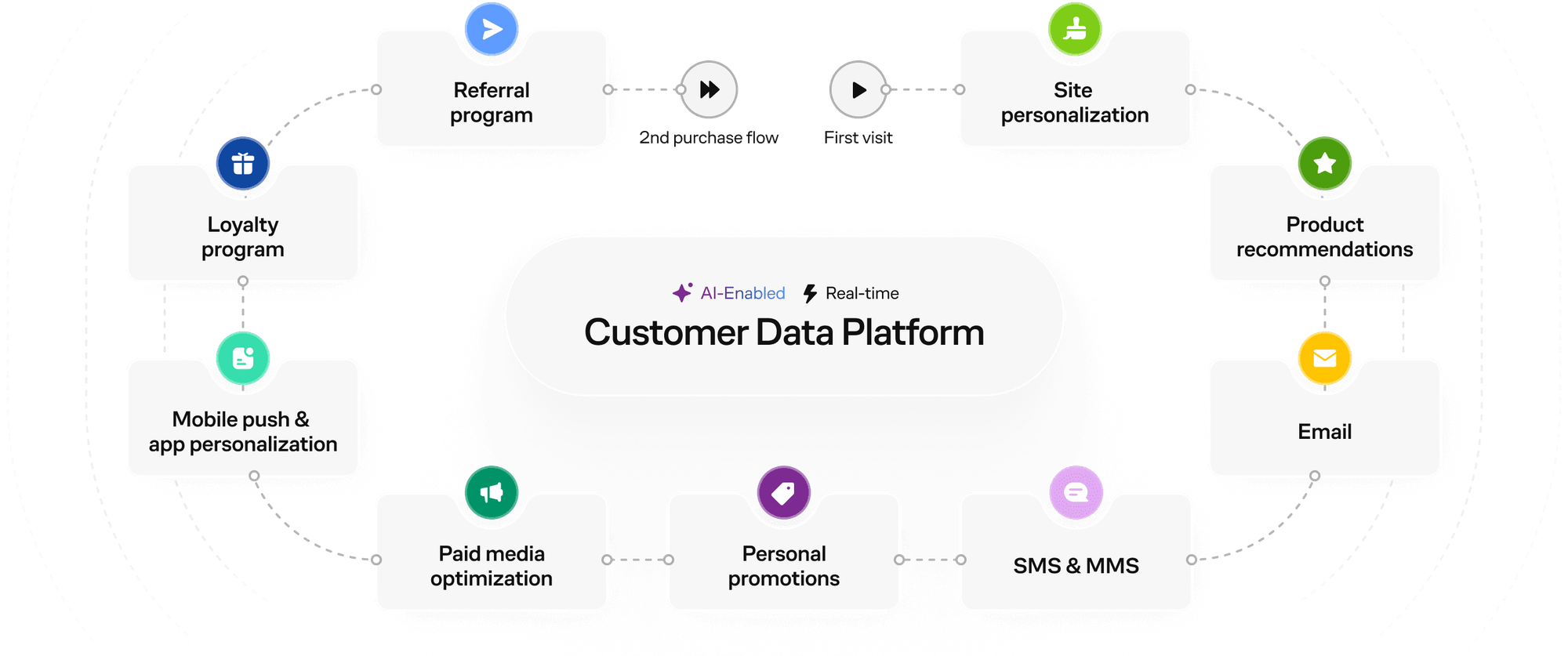
Maestra combines CDP, site personalization, an omnichannel journey builder, product recommendations, loyalty, email, SMS, mobile push, paid media, and reporting in one platform. Before, brands like Furniture Fair ran five separate tools; Maestra's team consolidated all of them and cut stack costs by 27%.
Outcomes brands report
Customer proof
Sena stopped maintaining two of everything

The US and EU each had their own account, which meant every segment and every flow was built twice and neither side saw the whole customer. One platform ended the duplication and the campaign share of revenue climbed with it.
1.8% → 6.8%
of total revenue attributed to campaigns

How it works
Nothing goes dark while you move
Audit first
Your forward-deployed marketer maps what you run today and what it will look like once it is one platform.
Build in parallel
The new flows and segments are assembled next to the live ones, so there is no window where campaigns stop.
Cut over deliberately
You go live channel by channel on a date you picked, with the old stack still standing behind you until you do not need it.
The platform
What makes Maestra different starts with the data model
Most platforms bolt commerce features onto a generic data model. Maestra built its data model around products, orders, and customer status from day one, which is why ten modules can share it cleanly. That foundation runs at 2M RPM with under 300ms processing.
Your forward-deployed marketer
The account load is the whole trick
Attentive service depends less on goodwill than on arithmetic. A Maestra marketer carries fewer than 15 accounts where 60 or more is normal elsewhere, which is what makes a 5-minute response and four strategy meetings a month something you can plan around.
Fewer than 15 accounts per marketer, versus 60+ industry-wide
5-minute response time versus 72 hours elsewhere
4 strategy meetings a month instead of 1
Replace your stack
Count the integrations you maintain
Every point tool in a stack comes with a connector somebody has to keep alive, and the customer data ends up split along those seams. Consolidating removes the connectors along with the tools.
What would change on your account
The useful conversation is about your data, your channels, and what a forward-deployed marketer would do in the first month.